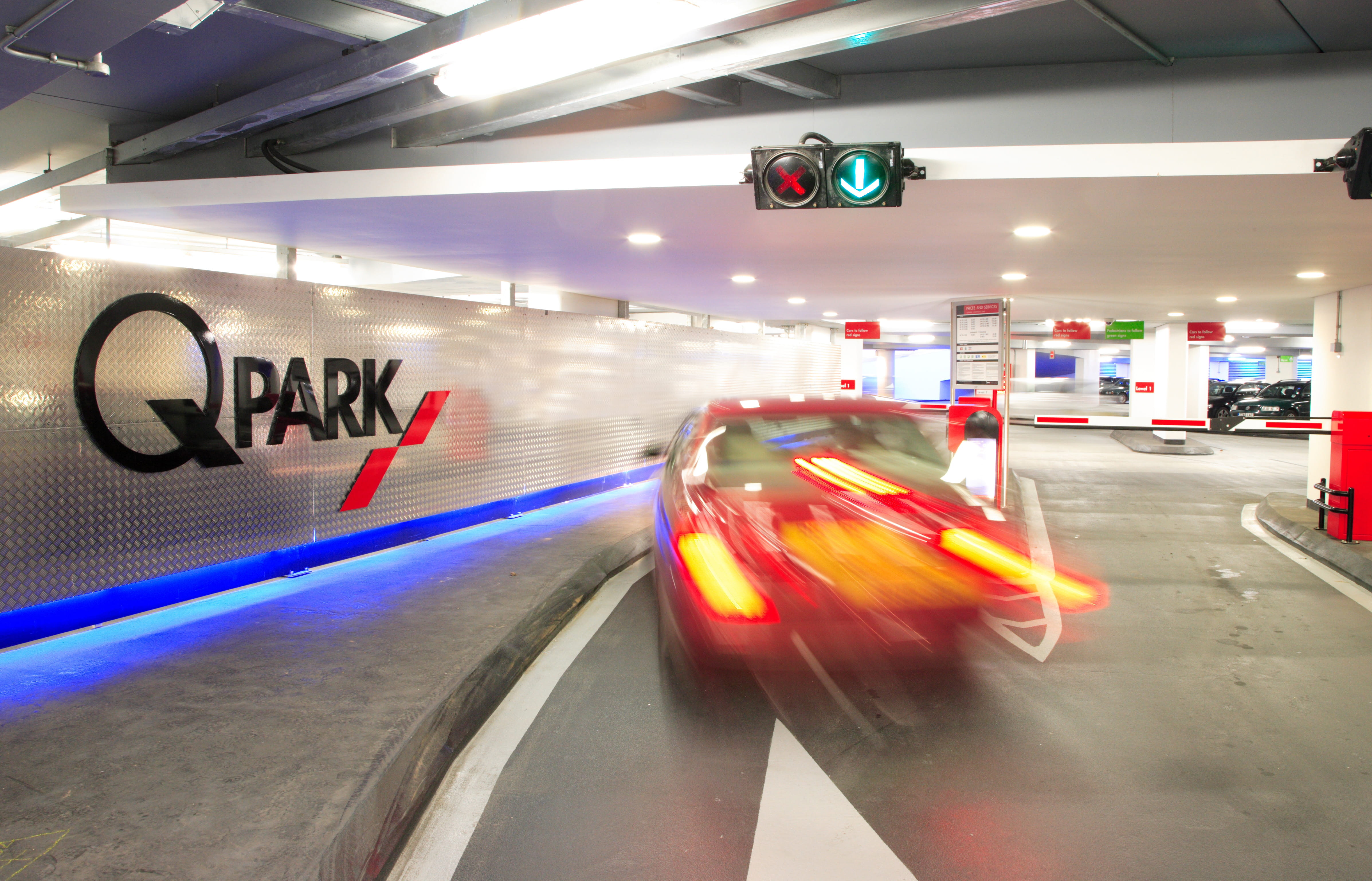
Addressing new urban challenges does not always require new locations or large-scale construction. In many cases, resilience begins with reassessing the potential of existing infrastructure. Across Western Europe, cities are increasingly exploring how what is already in place can contribute to preparedness, continuity and adaptability in times of disruption.
This article examines the possible role of off‑street parking facilities within broader urban resilience strategies.
Urban systems under pressure
Western European cities have developed highly efficient systems for mobility, energy, healthcare and logistics, optimised for everyday demand and predictable use. While this efficiency has delivered strong economic and social outcomes, it also leaves limited capacity to absorb prolonged or large‑scale disruption.
Recent developments – including extreme weather events, energy shortages, cascading infrastructure failures and heightened geopolitical uncertainty – have made clear how vulnerable cities can be when systems operate with minimal redundancy. These moments underline the dependence on infrastructure that was never designed to function under crisis conditions.
Within this evolving policy discussion, Q‑Park contributes its perspective as a long‑term mobility partner to cities. In acute situations, similar strategic questions arise time and again:
- Where can people safely gather or shelter?
- Where can essential services, including healthcare, be expanded rapidly?
- Where can logistics and coordination be organised without the immediate need for new construction?
In many urban areas, there is a shortage of robust, accessible locations (accessible by people and vehicles) that can be made operational at short notice. Developing new facilities often requires time, space and financial resources—precisely those requirements that are least available during emergencies.
Urban resilience is, by definition, a shared responsibility. Q‑Park recognises this and seeks to play a constructive role.
Off-street car parks as part of the urban baseline infrastructure
Efficient use of scarce inner‑city space is a central theme in European urban policy, particularly in the context of sustainability, accessibility, mobility, safety and climate adaptation. Increasingly, the focus is shifting from building new assets to maximising the functionality of existing infrastructure through planned multi‑use.
Within this policy debate, off‑street car parks are gaining attention. Structurally robust and strategically located, they are typically well connected, equipped with power supply, ventilation systems and logistical access, and distributed throughout cities close to key urban functions.
While their primary role is to support daily mobility, these physical characteristics also make car parks potentially relevant in exceptional circumstances. Q‑Park parking facilities operate as part of the urban baseline infrastructure: available 24/7, accessible, secure, and capable of being managed remotely. This does not mean that car parks are emergency facilities by default, but it does mean they can function as enabling assets within wider resilience and contingency planning.
Historically, comparable facilities have already played supporting roles during periods of disruption. As European cities continue to develop integrated resilience strategies, existing infrastructure offers opportunities for collaboration, planning and complementary use - without compromising its core function.
Adam Bidder, Managing Director of Q-Park UK and Ireland commented “As cities rethink how they prepare for disruption, Q-Park believes the most immediate and scalable opportunities for resilience lie within the infrastructure we already operate and invest in every day. By designing and managing high-quality, centrally located parking facilities as flexible, multi-use spaces, we are helping cities make smarter use of limited urban space while supporting more adaptable, sustainable and liveable environments.”
About Q-Park
Q-Park is a leading off-street parking infrastructure owner and operator with well-managed commercial parking facilities across seven western European countries. We operate off-street parking spaces we own, have under concession or with long-term lease contracts from public and private landlords. We focus on off-street purpose-built parking facilities at strategic locations. We operate more than 5,500 parking facilities comprising over 1.2 million parking spaces in the Netherlands, Germany, France, Belgium, United Kingdom, Ireland and Denmark. Based on publicly available industry data for our competitors, we estimate that we are a top three player, based on the estimated off-street revenues, in all the countries in which we operate. Q-Park also has numerous mobility hubs which provide access to a variety of mobility solutions. We house and support a range of activities from last mile logistics, electric vehicle charging, micromobility and car sharing services which help support urban accessibility, sustainability and liveability.